
Weeks of board-ready analysis. Now minutes to produce.
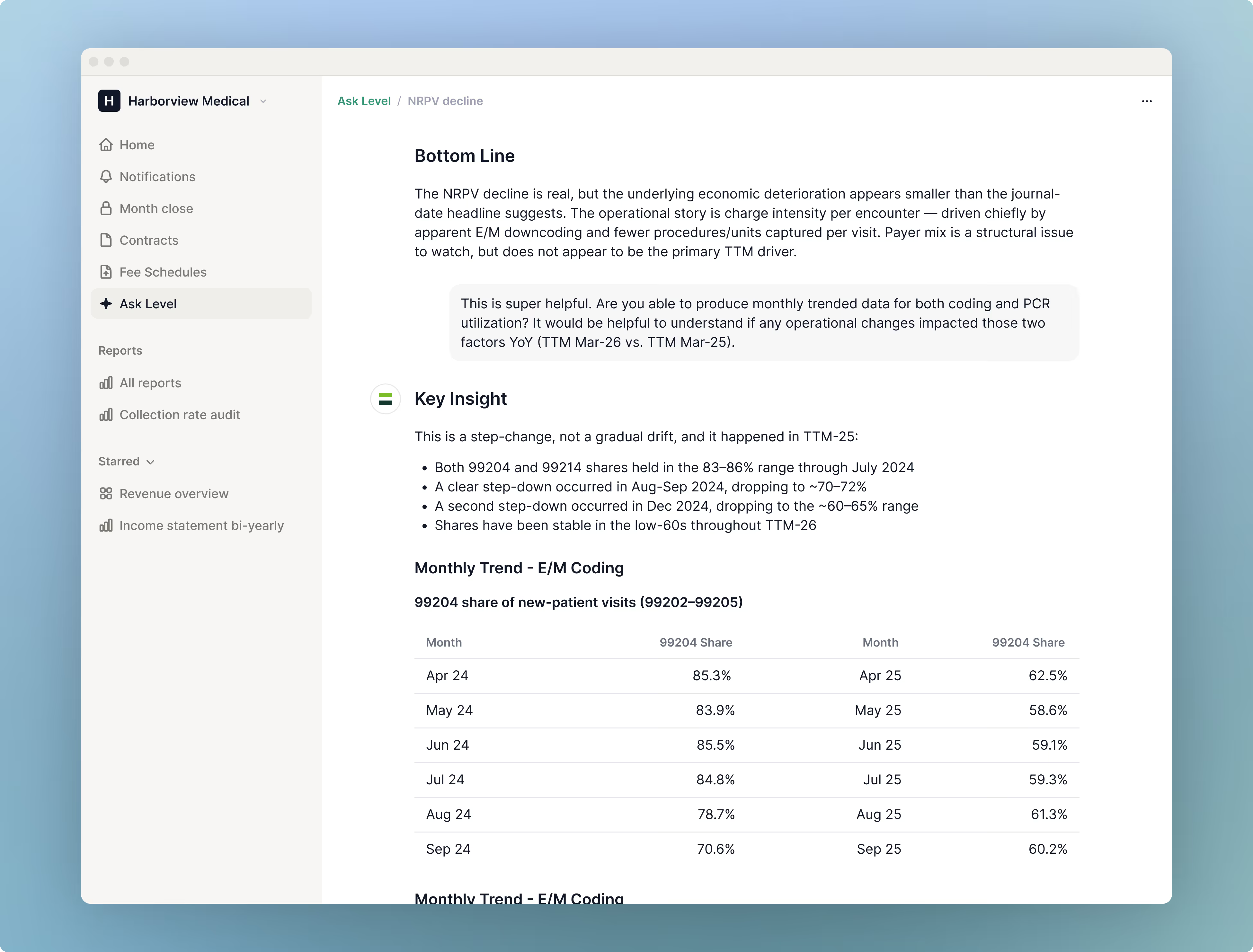
How is Level able to provide insight like this?
Healthcare financial data never stops changing. Claims adjudicate. Payments repost. Denials overturn. Contracts amend retroactively. AR evolves continuously through time.
Any snapshot is wrong by definition. And raw data, even perfectly organized, is not net financial truth.
Level continuously reconciles every transaction back to source and maintains its financial state as reality changes — net revenue, net AR, expected reimbursement, payer performance, and financial outcomes.
The result is a continuously maintained financial truth layer.
Because every analysis and AI-generated insight runs on top of that foundation, Level can explain not just what happened, but why.
Any snapshot is wrong by definition. And raw data, even perfectly organized, is not net financial truth.
Level continuously reconciles every transaction back to source and maintains its financial state as reality changes — net revenue, net AR, expected reimbursement, payer performance, and financial outcomes.
The result is a continuously maintained financial truth layer.
Because every analysis and AI-generated insight runs on top of that foundation, Level can explain not just what happened, but why.


Make money, save time. Get Level.
© Level Health 2026
